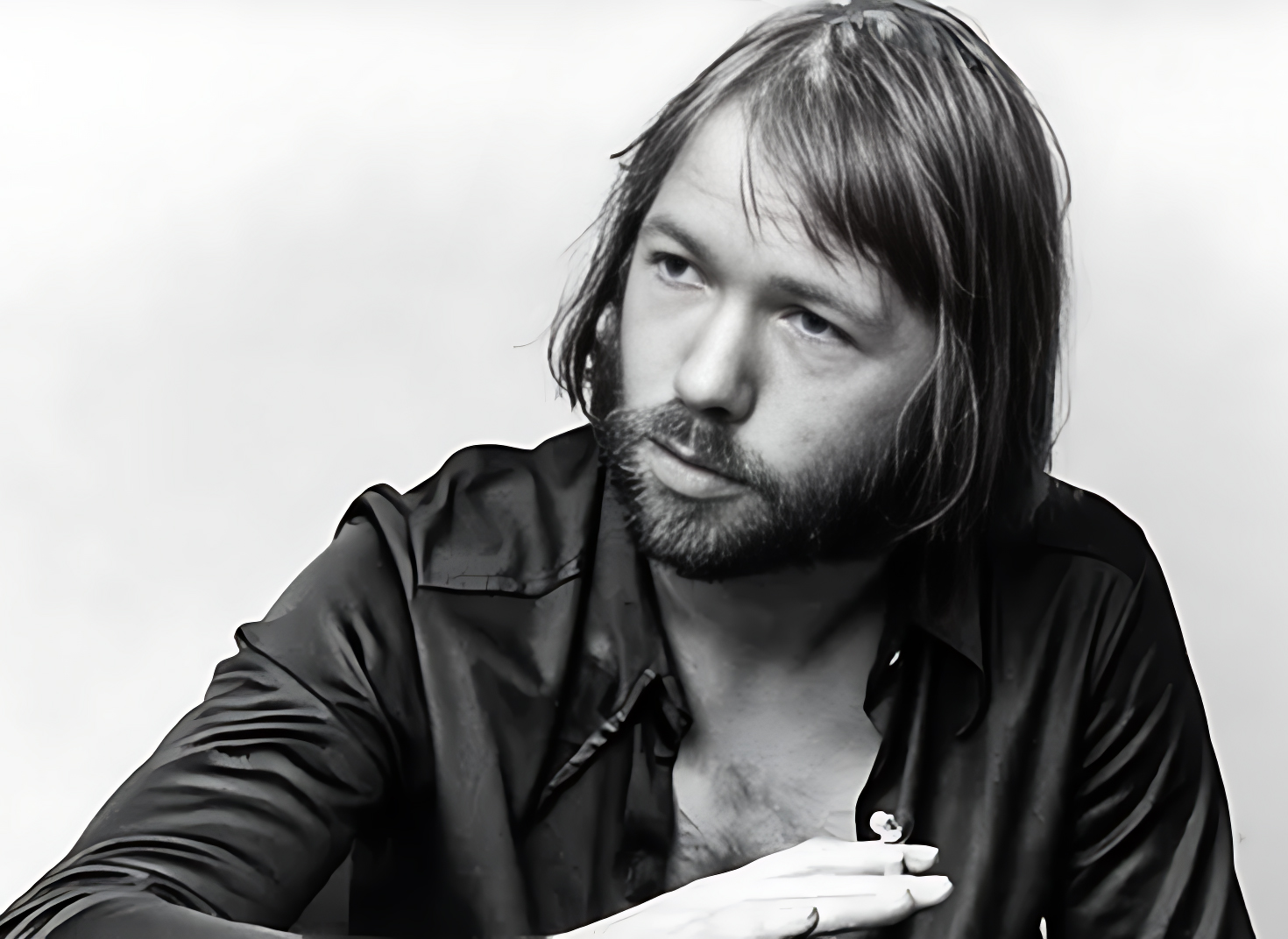
Leif Nylén, art critic — Sivert Lindblom (Italian) — Konstrevy No. 5–6, 1966
Maskinöversatt — ännu ej granskad.
From Konstrevy 5-6/ 1966 – Leif's contemplation on Sivert's artistic language
"New materials, new construction methods. Synthetic materials and alloys that can withstand any treatment. Flexible, light, chameleonic. Plastic has no 'soul'! Open, neutral, generously moldable materials: shiny mirrors for wishes and ideas. Materials and methods that create a new world of forms, forms that traditional notions of form are actually unable to read and interpret into an acceptable meaning.
The old categories find no grip in the shiny, bulging, boundless surface. Now the surface has taken over (or is at least in the process of doing so). With the new materials and methods, mass and the control of mass no longer pose the same vital problems. The new materials allow for a form that corresponds neither to the organic nor the tectonic conception of form.
The law of gravity, inertia, statics no longer affect as heavily and unambiguously. A new form emerges, a form that radically unites surface and volume and brings them together into an undulating shell – self-supporting and flexible. Inside the shell there is nothing! No mass, no frame. No focal point, no axes. Smoothly, the shell thickens or thins as needed – but it is nothing that can be experienced as tectonic; it offers no oppositions, no dialectical drama. Addition, juxtaposition, and asymmetrical, decentralized development replace the hierarchical form organization – the 'grand form' is no longer needed.
Grammar is dissolved into 'word chains'! Movement runs in the surface, along the shell, around the shell in all directions – but it no longer breaks perpendicularly through. Supersurface: the problem is no longer to construct a form, to bind and stabilize a mass; the problem is rather to connect the form into an information and energy flow.
It is more essential to express ideas and social functions than to describe isolated material properties. It concerns clarity, accessibility, adaptation, and space. Surfaces, self-supporting shells, supersurface. Where as much information as possible can be contained, transported, and combined: simultaneously, side by side. Supersurface, luminous, smooth, and undulating. But it also presupposes other ways of reading, a changed conception of form."
Excerpt in Italian: I nuovi materiali consentono una forma che non corrisponde né alla concezione organica né a quella costruttiva. La legge di gravità, l'inerzia e la statica non incidono più con la stessa pesantezza e inequivocabilità. Si sviluppa una nuova forma, che unisce radicalmente superficie e volume in un involucro ondeggiante — senza sostegno e flessibile. Entro l'involucro non c'è nulla! Né massa, né telaio. Né punto centrale né asse.
READ MORE about Leif Nylén by Åsa Beckman https://www.dn.se/kultur-noje/bocker/asa-beckman-leif-nylen-var-en-ovanligt-oppen-generationskritiker/
Copied memorial text from above DN 2018-06-18
"Of course, older critics can see and assess young contemporary works, but the younger ones contribute a different sensibility. They have shared the same mental environment as the artists – TV programs, children's books, politics, advertising, dishes, fashion, everything. Therefore, they have a special understanding of the thoughts and experiences that are currently being articulated.
And Nylén was persistent. In newspapers and magazines during the 60s, he pedagogically tried to explain, present, and debate what was happening. (For example, he tried to make Arthur Lundkvist understand that one could indeed mix different art forms.)
But what made Leif Nylén unusual as a generational critic was that he was so open. While describing sound art at Moderna Museet, he was receptive to art that was not at all typical of the time. In the autumn of 1964, he could sensitively perceive Anna Rydstedt's subdued poetry and describe her naked and sincere poems. With the same perceptiveness, he sided with the often-mocked 'petit bourgeois' Paul McCartney against the rebel John Lennon.
That openness allowed Leif Nylén to survive his decade. For Swedish poets, for example, he would become an empathetic reader for another four decades. In his poetry reviews, he always placed himself on par with the poems, interpreting and telling us readers what was going on in them.
Can young literary critics learn anything from him? Yes, possibly that one who is rooted in the text is not as exposed to trends that come and go. Leif Nylén was always interested in how something was made, in language, style, and representation. That is to say, what lives on through the decades."
Here is a link to one of Leif's texts from "The State & Capital": https://sv.wikipedia.org/wiki/Den_ena_handen_vet_vad_den_andra_g%C3%B6r